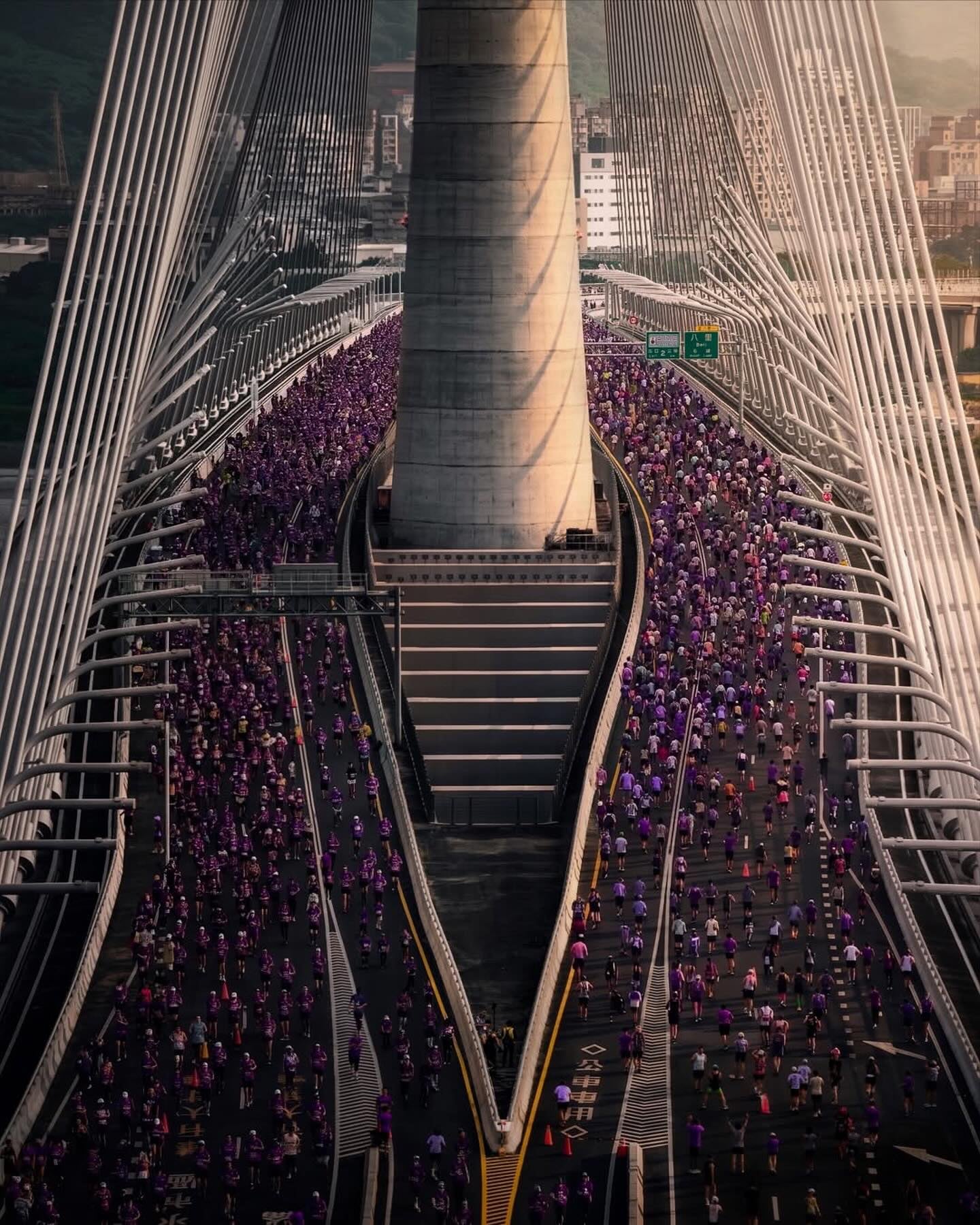
The Danjiang Bridge opened to traffic on May 12, 2026, crossing the mouth of the Tamsui River between the Tamsui and Bali districts of New Taipei City. Designed by Zaha Hadid Architects with engineering teams in Taiwan and Germany, the bridge gives northern Taiwan a new road connection and a new silhouette on the coast.

At 920 meters long, with a 211-meter tower and a 450-meter main span, it is recognized as the world’s longest single-tower asymmetric cable-stayed bridge. Its scale is substantial, but the profile is deliberately spare. A single concrete tower, a shallow steel deck, and radiating cables keep much of the horizon open.
In an interview with La Vie, project architect Huang Shao-wei (黃劭暐) describes the design as an exercise in “elegant simplicity.” The team studied the movement of the sunset across the seasons and shaped the tower so the summer-solstice sun can appear through its central opening. The tower’s form and the changing angles of 126 light poles also draw on the movement of dancers.

The asymmetric structure was partly a response to the surrounding environment. Moving the tower toward the Tamsui side reduced the amount of heavy construction required near the Wazihwei wetlands on the Bali shore. Prefabricated steel sections shortened work on the water, while warm, restrained nighttime lighting was chosen to limit disruption to nearby wildlife.

Before regular traffic began, a public run and bike ride gave people an early opportunity to cross the bridge under their own power. Photographs shared by Zaha Hadid Architects show crowds occupying the roadway, revealing the scale of the tower and cables more directly than an empty architectural view could.
